

Starts 21st of September 2025 | Drawing | Painting | Mentoring
190/month (September–June)
This 3-year-long programme offers a rigorous and immersive education in the fundamentals of classical drawing, rooted in observational practice and traditional techniques. Designed for artists seeking to deepen their visual language, refine technical skill, and develop a cohesive body of work, this course provides a structured yet personal path, ready to start a career in the arts.
From Beginner to Master
Artist Development Course
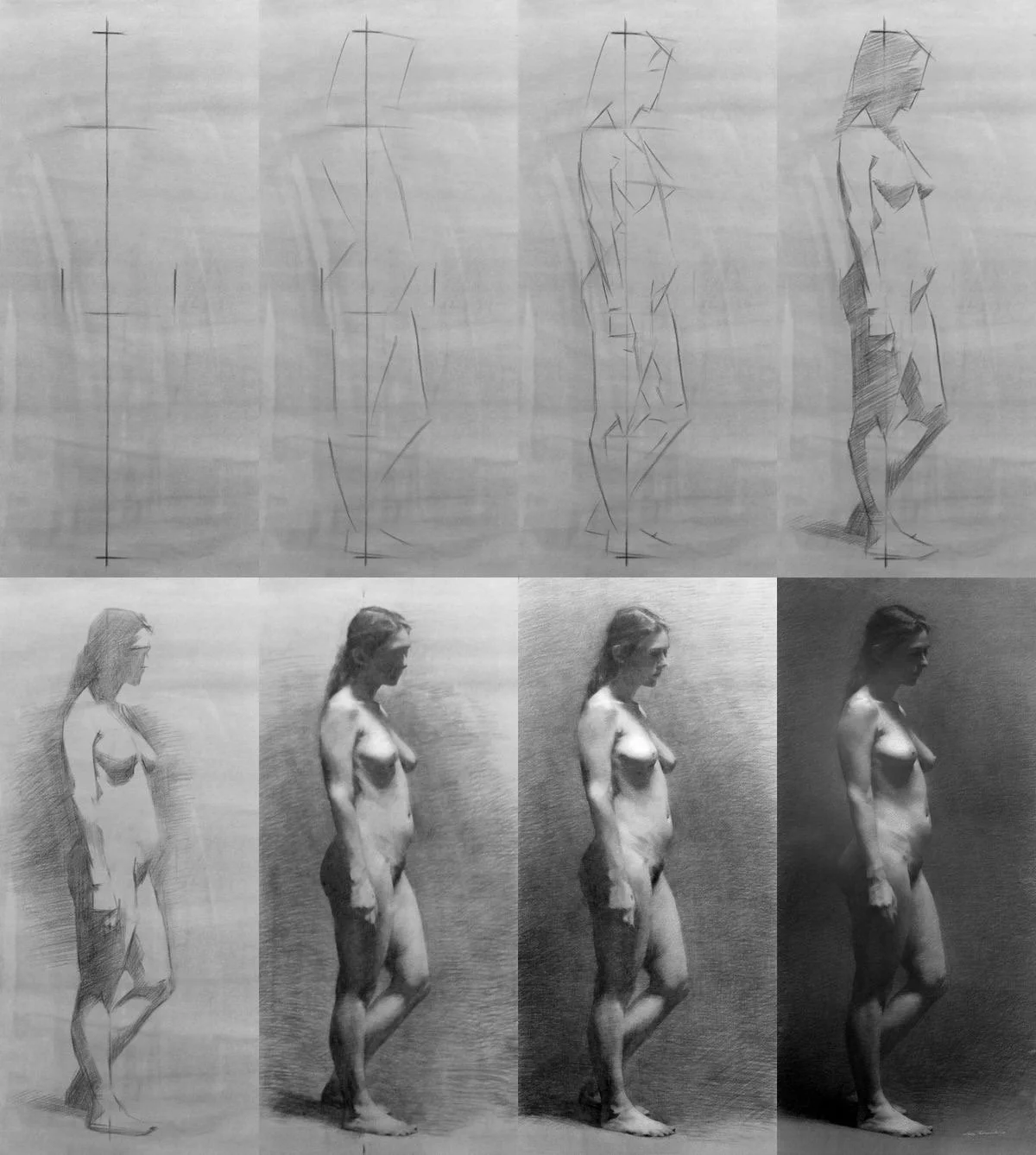
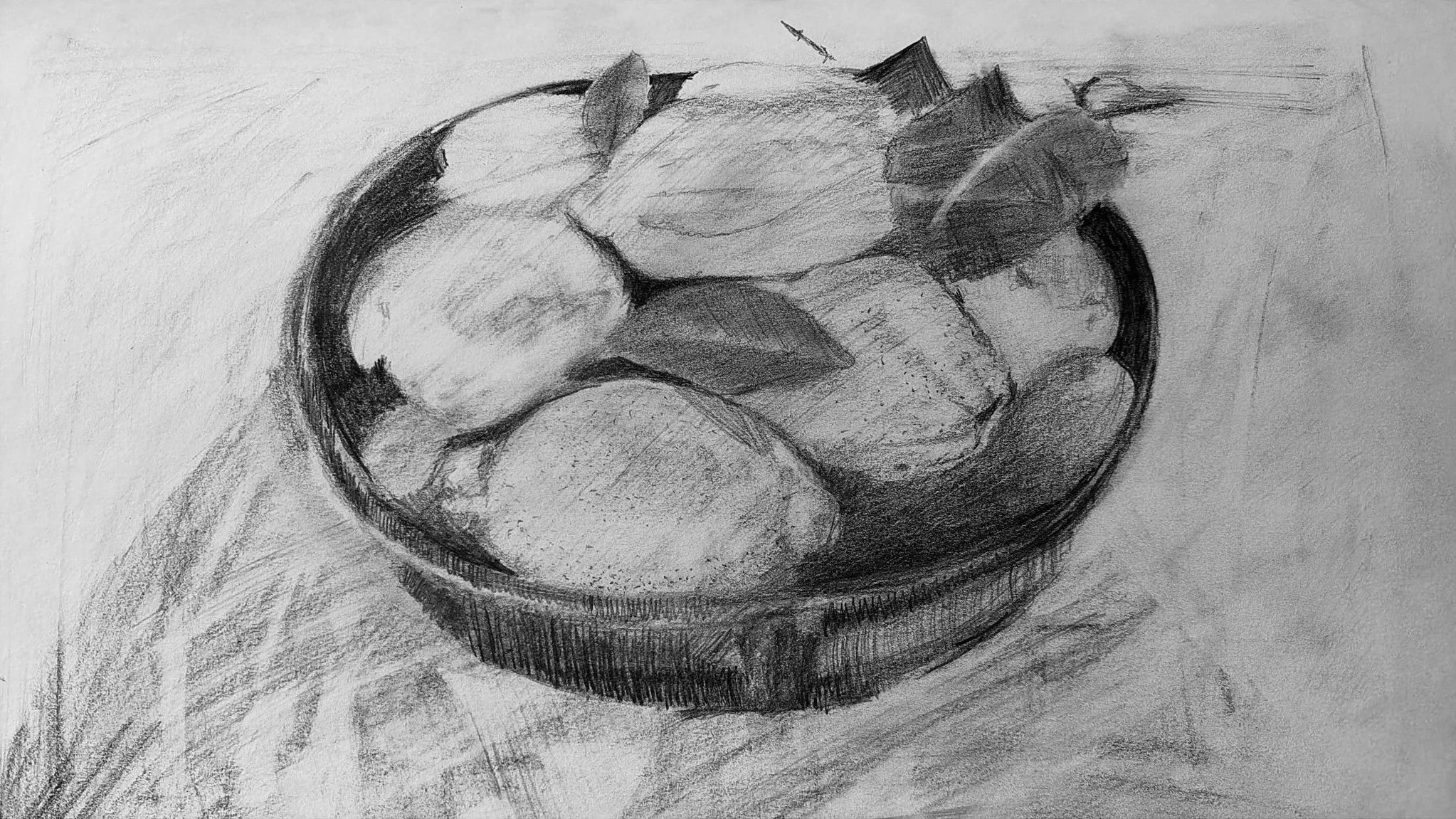
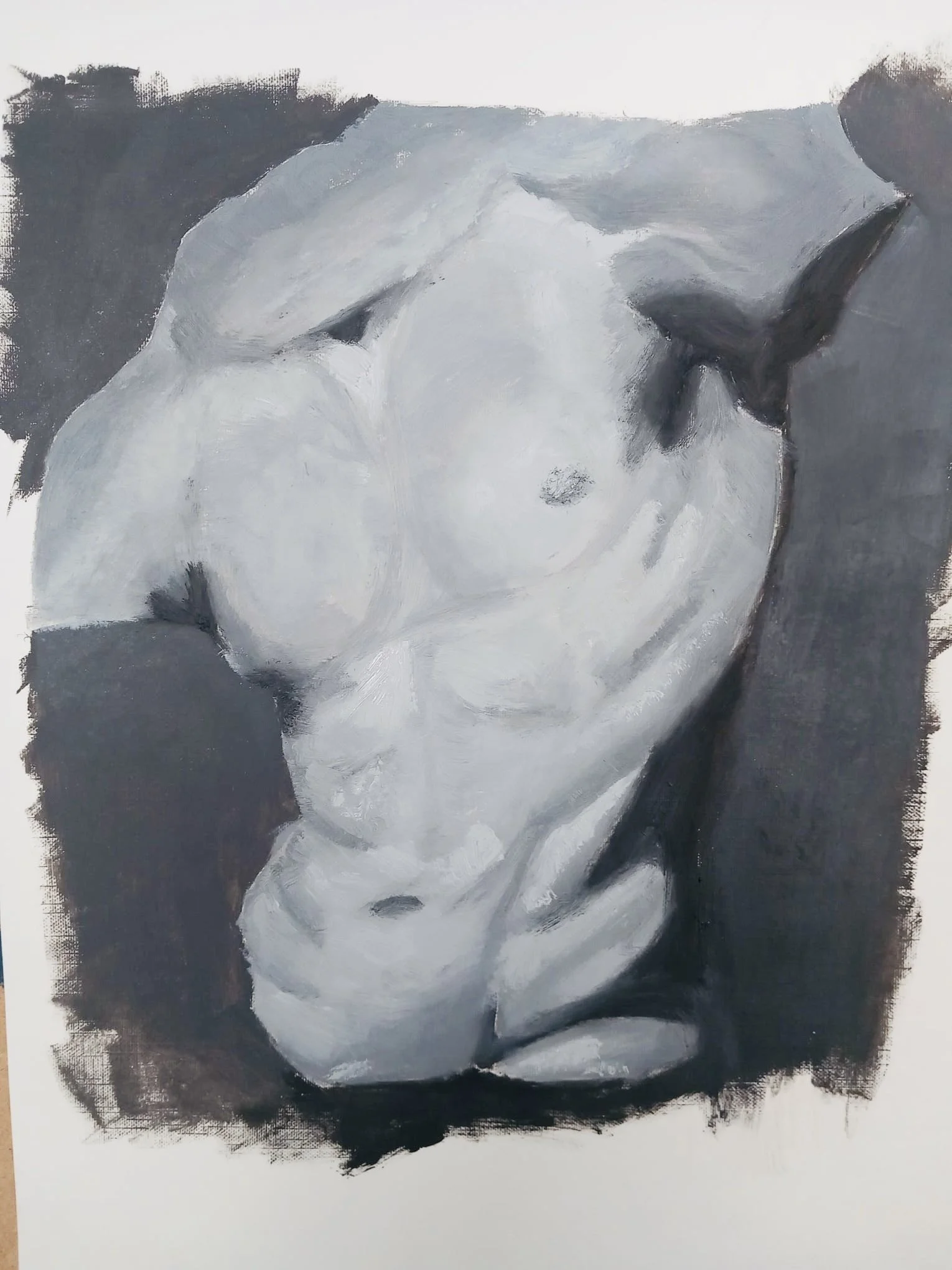
In the first year, students will work from still life and printed references. In the second year, we move on to figure drawing, third year is dedicated to the development of personal style.
With an emphasis on discipline, sensitivity, and sustained observation, each session builds toward mastery of tone, proportion, composition, and expression.
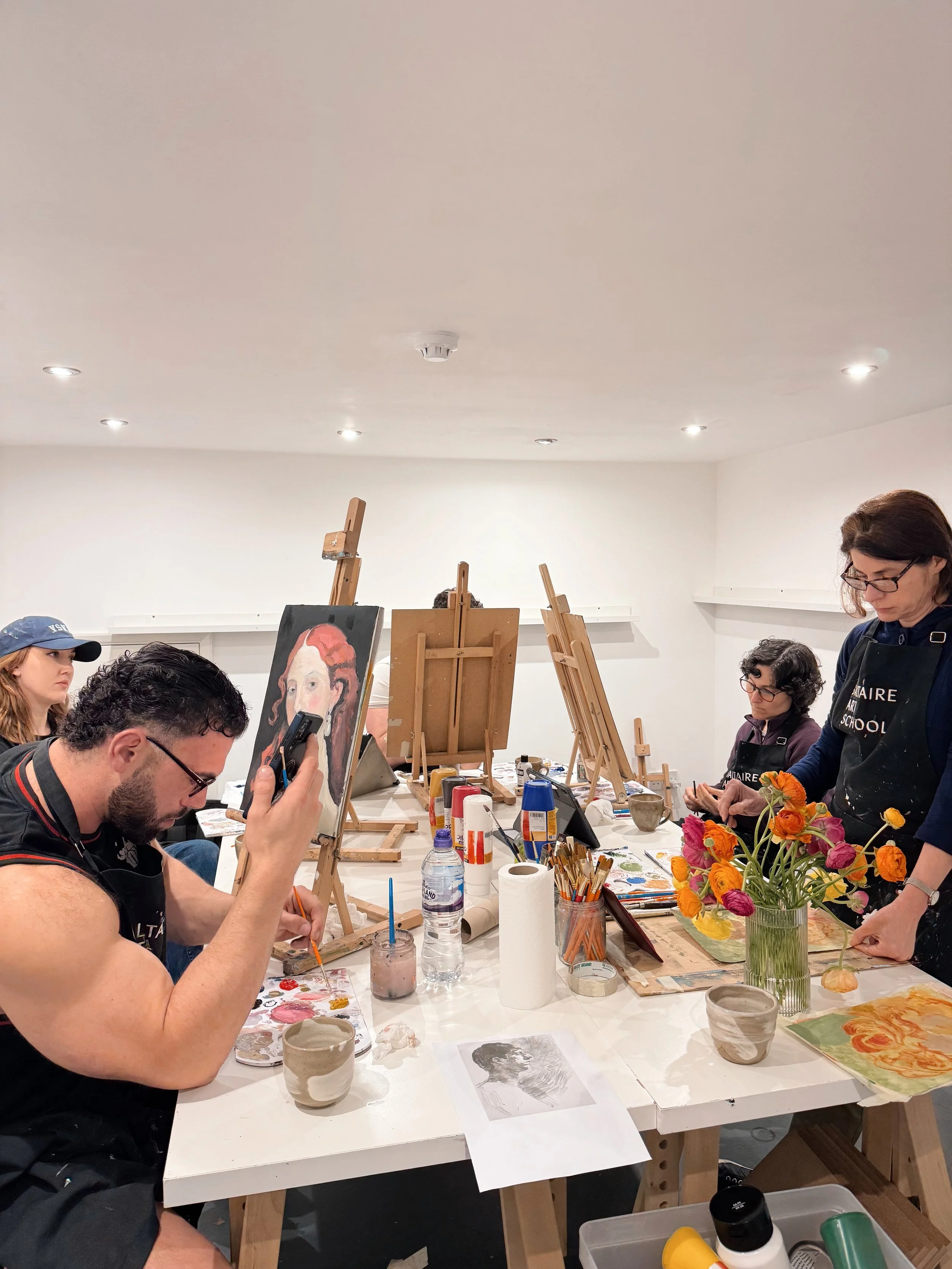
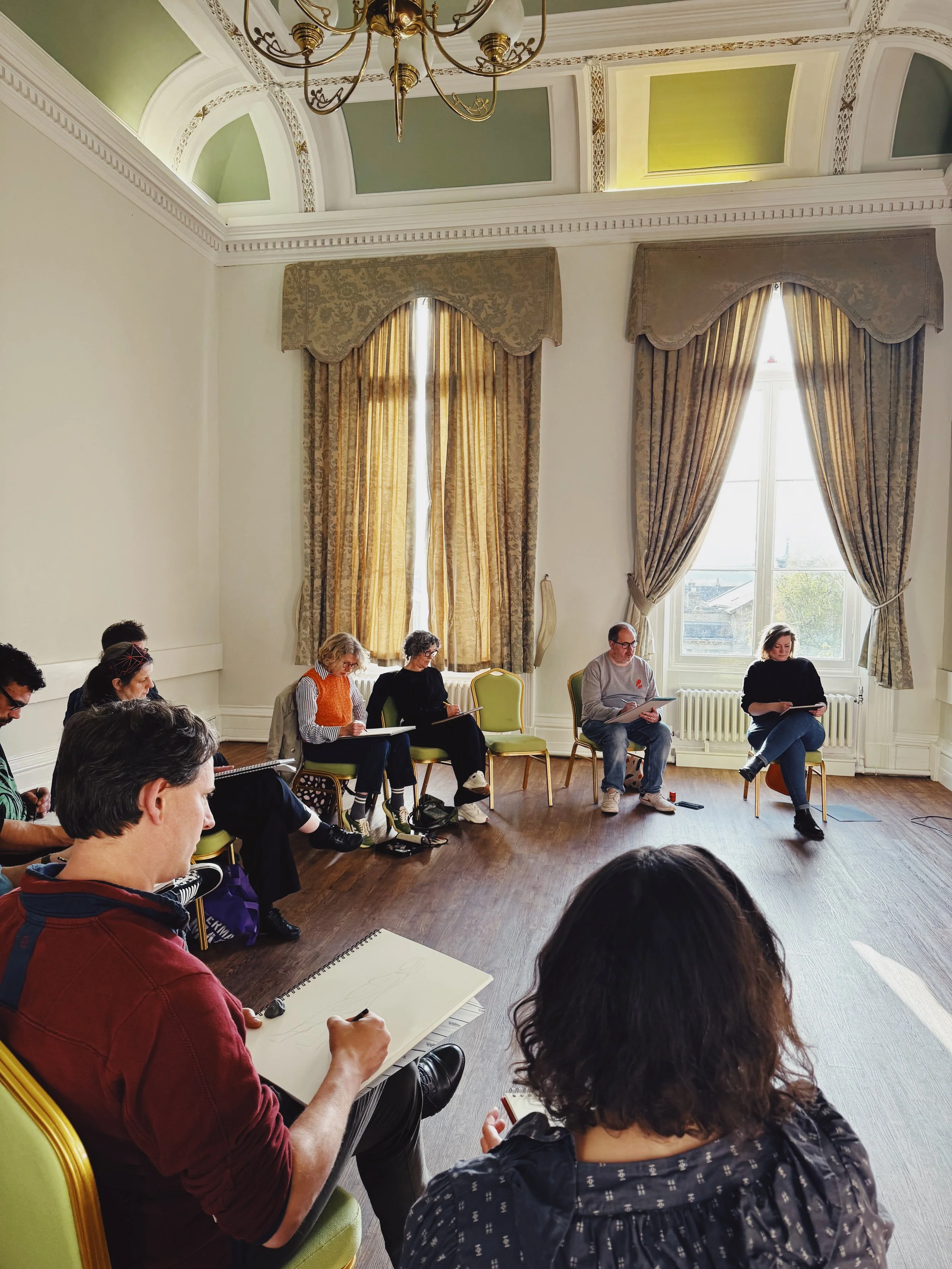
Classes are taught in small groups, allowing for individualised guidance and mentoring. Over the course of three years, students will receive a number of formal appraisals with Saltaire Art School founder Nina Hunter, who offers tailored feedback and professional mentorship to support growth and direction.
This course is ideal for committed beginners as well as experienced artists wishing to revisit and deepen their practice within a classically focused framework.
Schedule: Twice-weekly sessions from September to June;
Mentoring: 1-hour mentoring session and portfolio assessment with Nina Hunter every 6 weeks; available for bespoke feedback throughout the course;
Fees: £190 per month for 10 months (total £1,300)
Location: Saltaire Art School
Year 1 – Foundations
Objective: Build the essential skills, vocabulary, and visual awareness for accurate observation and confident mark-making.
Theory & Vocabulary
Introduction to drawing terminology
Understanding visual language as communication
Tools & Materials
Types of pencils, papers, and other drawing mediums
Understanding textures and surfaces
Basic Mark-Making & Techniques
Lines, hatching, cross-hatching
Gradients, contrast, and tone
Circles, squares, ellipses, and basic forms
Shading, light, and value studies
Value and distance relationships
Observation & Eye Training
Using viewfinders to frame compositions
Recognising shapes and forms in objects
Introduction to composition
Proportions
Measuring techniques
Sight-sizing and sight angles
Understanding accurate human and object proportions
Perspective
One-point perspective
Two-point perspective
Multiple vanishing points
Drawing cubes, ellipses, and arches
Composition
Identifying focal points
Foreground, middleground, and background
Rule of thirds, golden section, golden triangles, spiral section, and other compositional frameworks
Techniques & Mediums
Sfumato techniques: using tortillon, erasers, tissue, soft brush
Working with charcoal, pastels, textured papers
Combining media for tonal and textural effects
Art History & Masters
Study of Leonardo da Vinci, Michelangelo, and Rembrandt
Analysis of technique, style, and compositional choices
Introduction to contemporary drawing styles and expression
Year 2 – Figure Drawing
Objective: Develop a thorough understanding of the human form, proportion, structure, and expressive drawing techniques.
Human Form & Proportions
Study of the skeleton, joints, and muscles
Understanding accurate human proportions
Measuring techniques: sight-sizing and sight angles
Translating three-dimensional structure into two-dimensional drawing
Light, Shade & Tone
Using tone and value to create form
Light and shadow to define structure and volume
Contour and line work for clarity and precision
Structure & Form
Breaking the body into geometric shapes for analysis
Gestural drawing to capture movement, flow, and posture
Symmetry, asymmetry, and centre of gravity in the figure
Perspective & Foreshortening
Applying perspective principles to the human body
Understanding foreshortening and spatial depth
Specific Studies
Portraits: head and facial features
Hands and feet: anatomy, proportion, and expression
Year 3 – Art Critique & Personal Expression
Objective: Consolidate technical skills, explore personal vision, and develop a unique artistic voice through experimentation and critical reflection.
Tailored Personal Journey
Individualised projects guided by personal interests and artistic goals
Setting challenges to stretch technical and conceptual boundaries
Encouragement to explore unfamiliar subjects, techniques, and styles
Observation & Expression
Deepening observational skills to capture nuance and emotion
Translating personal perception into expressive mark-making
Balancing accuracy with artistic interpretation
Materials & Experimentation
Exploring diverse media: charcoal, pastel, ink, graphite, mixed media
Experimenting with scale, surface, texture, and layering
Learning through trial and error: embracing mistakes as part of the creative process
Combining classical and contemporary techniques to find a unique style
Critique & Reflection
Regular group and one-to-one critiques to develop critical thinking
Constructive feedback to refine ideas and technical execution
Developing the ability to self-assess and iterate work independently
Developing a Unique Style
Encouraged risk-taking and exploration without fear of failure
Integrating influences from masters, contemporary artists, and personal interests
Building a cohesive body of work that reflects individuality and creative voice
Preparing for exhibition, portfolio development, or further study

About the Tutor
Nina Hunter is a classically trained artist, illustrator, and founder of Saltaire Art School. With over 15 years of experience in the creative industries, her work bridges fine art and illustration, and has been exhibited nationally and internationally. Passionate about traditional methods, Nina teaches with a focus on strong foundations, personal expression, and professional growth. She also mentors emerging artists and regularly exhibits her own work at Saltaire Art Gallery.
Read more at www.ninahunter.com